Scrum vs XP – When to use, what’s different, and how to combine
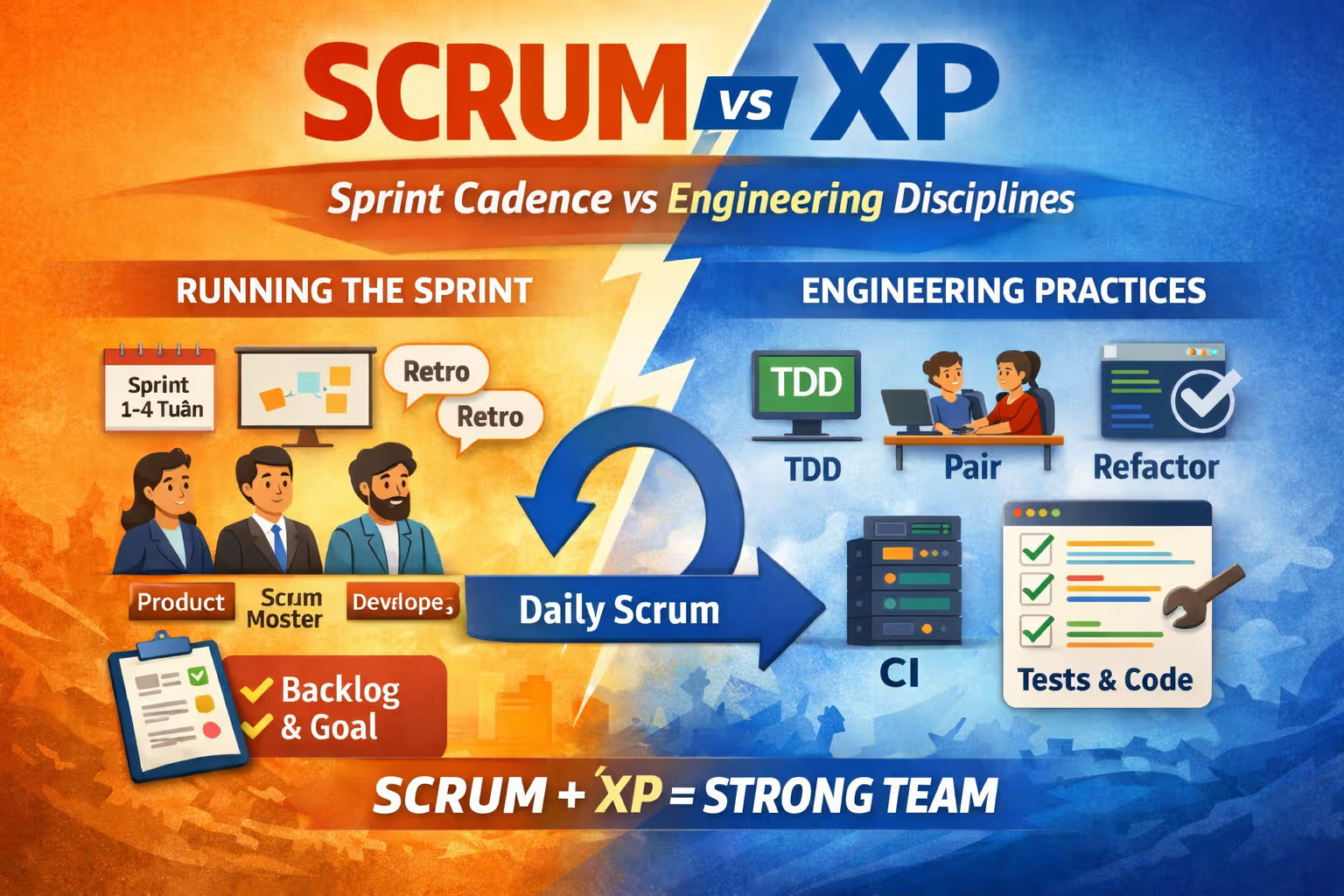
Scrum giúp “chạy đúng nhịp” – XP giúp “chạy chắc tay”. Nhiều team mạnh sẽ dùng Scrum + XP.
Ngôn ngữ • Language
- VI
- EN
Scrum vs XP — So sánh “thực chiến” theo PMI-ACP
TL;DR (1 phút)
- Scrum = framework giúp team làm việc theo Sprint, minh bạch & cải tiến qua Review/Retro. Scrum “nói bạn quản lý công việc thế nào”.
- XP (Extreme Programming) = phương pháp Agile thiên về kỹ thuật phần mềm: TDD, pair programming, CI, refactoring, coding standards… XP “nói bạn code & giữ chất lượng thế nào”.
- Nhiều team mạnh dùng Scrum + XP: Scrum để quản trị nhịp & ưu tiên; XP để đảm bảo technical excellence.
1) Tình huống mở bài (đúng kiểu đề thi)
Bạn đang làm sản phẩm số. Yêu cầu đổi liên tục, QA than “lỗi lặt vặt nhiều”, dev than “codebase rối quá, sửa là vỡ”.
- Nếu câu hỏi xoáy vào nhịp làm việc, minh bạch, cam kết Sprint, stakeholder review → mùi Scrum.
- Nếu câu hỏi xoáy vào giảm defect, nâng chất lượng, test tự động, tích hợp liên tục, pair, refactor → mùi XP.
2) Scrum và XP giống nhau ở điểm nào?
Cả hai đều “rất Agile” ở tinh thần:
- Làm theo vòng lặp ngắn để nhận feedback sớm.
- Ưu tiên giao giá trị thay vì tối đa hóa tài liệu.
- Team cần collaboration mạnh (đặc biệt XP còn đẩy collaboration lên mức “cực đoan” như pair programming).
- Luôn inspect & adapt: phát hiện vấn đề sớm, sửa sớm.
3) Khác nhau cốt lõi: Scrum quản trị nhịp, XP quản trị kỹ thuật
| Khía cạnh | Scrum | XP (Extreme Programming) |
|---|---|---|
| “Trọng tâm” | Quản lý công việc theo Sprint, minh bạch, feedback | Kỹ thuật phần mềm để giữ chất lượng & thay đổi nhanh |
| Dùng cho | Nhiều loại sản phẩm (không chỉ software) | Chủ yếu software development |
| Vai trò | Product Owner, Scrum Master, Developers | Customer / On-site Customer, Programmers, Testers, XP Coach (tuỳ biến theo team) |
| Nhịp làm việc | Sprint 1–4 tuần (phổ biến 2) | Iteration thường 1–2 tuần, release nhỏ thường xuyên |
| “Nghi lễ / event” | Planning, Daily Scrum, Review, Retro | Planning game (release/iteration), standup, acceptance testing… (ít chuẩn hóa hơn Scrum) |
| Artifacts | Product Backlog, Sprint Backlog, Increment + Goal/DoD | User stories + iteration plan + tests (nặng về test/quality artifacts) |
| Chất lượng | Scrum không bắt buộc kỹ thuật cụ thể | XP bắt buộc/khuyến khích mạnh: TDD, CI, refactoring, pair, standards… |
| Bẫy thường gặp | Làm Scrum nhưng “không có DoD/automation” → Sprint ra “hàng nửa chín” | Muốn áp XP nhưng văn hoá không sẵn sàng (ngại pair, ngại test) |
4) Khi nào nên chọn Scrum, khi nào nên chọn XP?
Chọn Scrum khi…
- Bạn cần khung làm việc rõ ràng để tạo nhịp giao hàng & minh bạch.
- Stakeholder cần review định kỳ, muốn thấy “mỗi Sprint ra được gì”.
- Team đa chức năng, sản phẩm có thể chia nhỏ thành Increment.
Chọn XP (hoặc ưu tiên XP practices) khi…
- Bạn đang đau đầu vì defect, regression, bug production.
- Codebase “nợ kỹ thuật” cao, thay đổi là vỡ → cần refactoring + test.
- Cần phát hành thường xuyên, yêu cầu biến động mạnh → cần CI + automation tests.
- Team là dev-heavy, muốn nâng “tay nghề” bằng thực hành chuẩn.
5) Cách kết hợp Scrum + XP (combo hay gặp nhất)
Một cách “rất PMI-ACP” là: Scrum cho quản trị – XP cho kỹ thuật.
| Bạn dùng Scrum để… | Và dùng XP để… |
|---|---|
| Sprint Planning / Review / Retro | Giữ chất lượng bằng TDD + CI + refactoring |
| Quản lý backlog, ưu tiên theo value | Viết acceptance criteria + acceptance tests |
| Cam kết Sprint Goal + DoD | “Đóng” DoD bằng automation tests, coding standards |
| Minh bạch tiến độ | Giảm work-in-progress bằng cách “xong thật” (tested, integrated) |
Nếu team nói “chúng tôi làm Scrum” nhưng mỗi Sprint vẫn tràn bug, lúc nào cũng late-stage testing, thì lời giải thường không phải “họp nhiều hơn”, mà là đưa XP practices vào DoD (test tự động, CI, refactor, standards).
6) Bẫy đề PMI-ACP hay gài (đọc là né)
- Bẫy 1: “Cắt test để kịp deadline”
Trong Agile/XP, trade-off chất lượng kiểu này thường là sai hướng. Ưu tiên: test tự động, CI, giảm scope, chia nhỏ, làm thin slice. - Bẫy 2: Scrum = kỹ thuật tốt
Scrum không tự động tạo ra technical excellence. Nếu câu hỏi về chất lượng, nhìn sang XP practices. - Bẫy 3: “QA là người duy nhất chịu trách nhiệm chất lượng”
XP/Agile khuyến khích whole team chịu trách nhiệm, built-in quality. - Bẫy 4: “Pair programming = lãng phí”
Đề thường muốn bạn thấy lợi ích: knowledge sharing, giảm defect, tăng code ownership.
7) Checklist ôn nhanh
Checklist – Scrum vs XP (VI)
8) Mini-mock
Mini-mock – Scrum vs XP
Bước tiếp theo: Scrum Process • XP Terms • Mock.
Scrum vs XP — Practical comparison for PMI-ACP
TL;DR (1 minute)
- Scrum is a framework for running work in Sprints with transparency and improvement via Review/Retro. Scrum is mainly about how you manage the work.
- XP (Extreme Programming) is an Agile method focused on software engineering discipline: TDD, pair programming, CI, refactoring, coding standards… XP is mainly about how you build with quality.
- Strong teams often do Scrum + XP: Scrum for cadence & product control, XP for technical excellence.
1) A typical exam-style scenario
You build a digital product. Requirements change often. QA reports many regressions. Developers complain the codebase is messy and fragile.
- If the question targets cadence, transparency, Sprint commitment, stakeholder review → think Scrum.
- If it targets defect reduction, automated testing, continuous integration, pairing, refactoring → think XP.
2) What Scrum and XP have in common
Both are strongly Agile in spirit:
- Short feedback loops
- Early value delivery over heavy documentation
- High collaboration (XP pushes collaboration to the extreme with pairing/whole team)
- Continuous inspect & adapt
3) The core difference: Scrum runs the cadence, XP runs the engineering
| Aspect | Scrum | XP (Extreme Programming) |
|---|---|---|
| Focus | Work management in Sprints, transparency, feedback | Engineering practices to keep quality high & change fast |
| Best fit | Many product types (not only software) | Mostly software development |
| Roles | PO, SM, Developers | Customer (on-site), Programmers, Testers, XP Coach (varies) |
| Cadence | Sprint 1–4 weeks (often 2) | Iterations often 1–2 weeks; frequent small releases |
| Events | Planning, Daily, Review, Retro | Planning game, standup, acceptance testing… (less standardized) |
| Artifacts | Backlogs + Increment + Goals/DoD | Stories + iteration plan + tests (heavy on quality artifacts) |
| Quality | Scrum does not prescribe engineering techniques | XP strongly prescribes: TDD, CI, refactoring, pair, standards… |
| Common pitfall | “Doing Scrum” without built-in quality (no automation/DoD discipline) | Adopting XP without culture readiness (resisting pairing/testing) |
4) When to choose Scrum vs XP
Choose Scrum when…
- You need a clear cadence and governance for delivery and stakeholder visibility.
- Stakeholders want regular review checkpoints.
- Work can be sliced into meaningful Increments.
Choose XP (or prioritize XP practices) when…
- You struggle with defects/regressions and unstable releases.
- Technical debt is high; changes are risky → you need refactoring + tests.
- You want frequent releases and rapid change → you need CI + automated tests.
- You are a software team and want a strong path to technical excellence.
5) How to combine Scrum + XP (most common in real life)
A very PMI-ACP-friendly approach: Scrum for management, XP for engineering.
| Use Scrum to… | Use XP to… |
|---|---|
| Run Planning/Review/Retro | Ensure quality with TDD + CI + refactoring |
| Manage and prioritize backlog | Turn acceptance criteria into acceptance tests |
| Commit to Sprint Goal + DoD | “Close” DoD with automation tests & standards |
| Make progress transparent | Reduce WIP by finishing “done for real” (tested, integrated) |
If a team says “we do Scrum” but every Sprint leaks bugs and testing happens late, the fix is usually not “more meetings” — it’s XP practices inside the DoD (automation, CI, refactoring, standards).
6) Common PMI-ACP traps
- Trap: “Skip testing to meet the deadline.”
Agile/XP usually prefers reducing scope, slicing thinner, automating tests, and integrating continuously. - Trap: “Scrum automatically means high quality.”
Scrum doesn’t enforce engineering discipline; XP practices do. - Trap: “QA alone owns quality.”
Agile favors whole-team ownership and built-in quality. - Trap: “Pair programming is waste.”
Exam logic often favors faster learning, fewer defects, stronger ownership.
7) Quick study checklist
Checklist – Scrum vs XP (EN)
8) Mini-mock
Mini-mock – Scrum vs XP
Next: Scrum Process • XP Terms • Mock.