Scrum Roles and Responsibilities – Product Owner, Scrum Master / Agile Project Manager, Developers (Scrum Team) (PMI-ACP)
Scrum Roles and Responsibilities – đúng người, đúng việc, đúng trách nhiệm.
Ngôn ngữ • Language
- VI
- EN
Scrum Roles and Responsibilities (Vai trò & trách nhiệm trong Scrum)
💡 Bài này dành cho ai?
- Bạn đã đọc bài Scrum Process và muốn đi sâu hơn vào “ai làm gì?” trong Scrum.
- Bạn chuẩn bị thi PMI-ACP và hay nhầm Product Owner vs Scrum Master vs Agile Project Manager vs Developers.
- Bạn đang làm việc trong team thực tế, muốn soi lại vai trò & ranh giới trách nhiệm.
TL;DR
- Scrum Team có 3 accountabilities (thường gọi là 3 roles):
- Product Owner (PO) – Tối đa hoá giá trị, sở hữu và ưu tiên
Product Backlog, quyết định release.
2. Scrum Master / Agile Project Manager (Agile PM) – Servant Leader, coach đội, gỡ impediments, bảo vệ Scrum Process & Scrum Values. - Developers (Development Team) – Nhóm đa kỹ năng, tự quản, trực tiếp tạo ra Increment “Done”.
- Product Owner (PO) – Tối đa hoá giá trị, sở hữu và ưu tiên
Product Backlog, quyết định release.
- 3 trụ cột Scrum:
- Transparency – Mọi người thấy được việc gì đang diễn ra.
- Inspection – Thường xuyên soi tiến độ & sản phẩm (như Sprint Review, Daily Scrum).
- Adaptation – Điều chỉnh dựa trên điều đã học (như Sprint Retrospective).
- Lăng kính PMI-ACP:
- Bài này gắn với: Agile Principles and Mindset, Team Performance, Value-Driven Delivery, Leadership, Servant Leadership, Team Empowerment.
Nếu bạn thấy bài hơi dày, hãy đi theo 3 bước:
- Đọc TL;DR + bảng cheat sheet ở giữa bài.
- Đọc kỹ 3 mục vai trò chính: Product Owner, Scrum Master / Agile PM, Developers.
- Khi gần thi, quay lại phần ECO 2025 mapping và Exam patterns & traps (được đánh dấu Advanced).
Nhắc lại: Scrum là gì & 3 trụ cột chính
Trước khi đi vào vai trò, nhắc lại nhanh:
- Scrum = một framework gồm giá trị, vai trò, sự kiện, artifacts & rules.
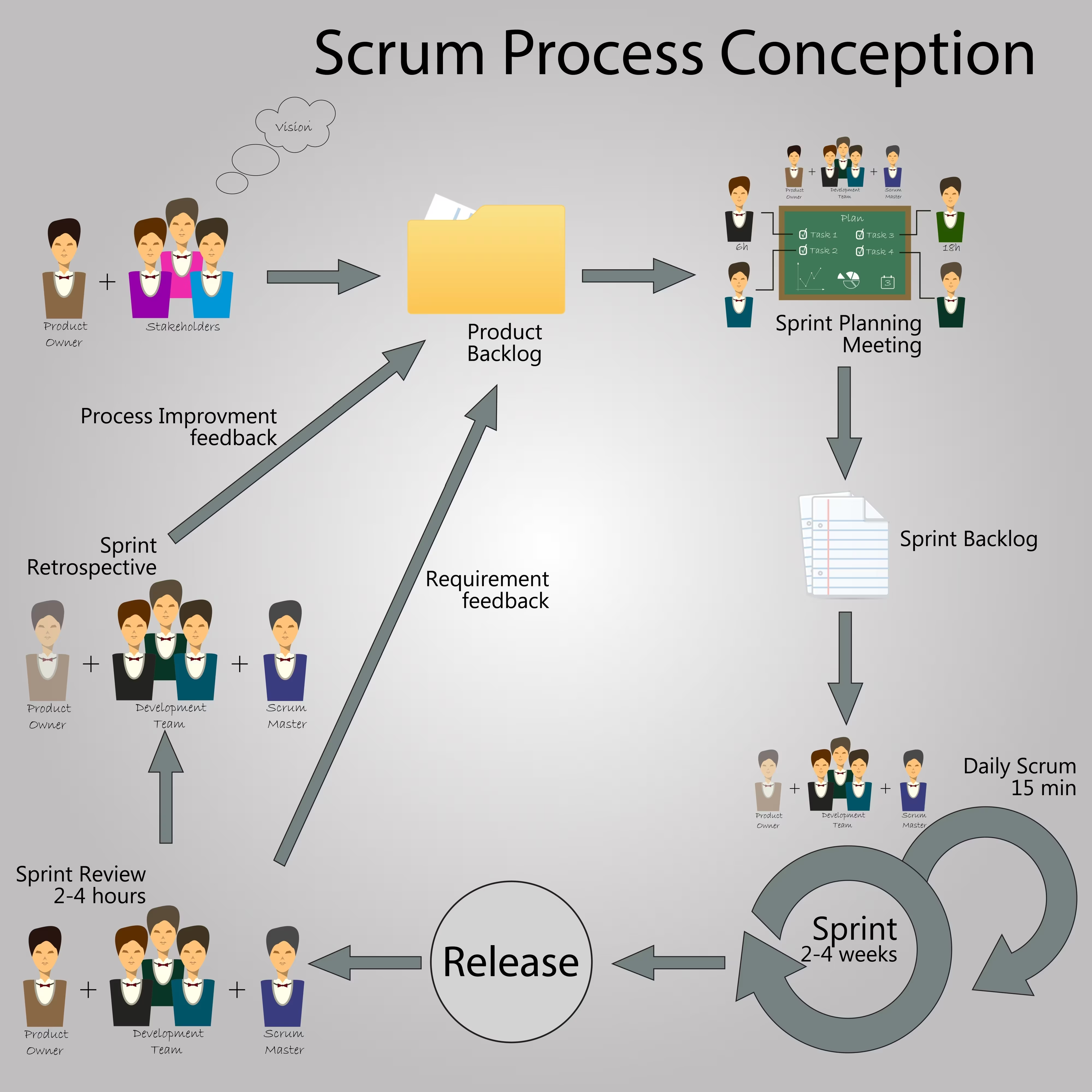
- Bài [Scrum Process] đã đi qua luồng từ Product Backlog → Sprint Planning → Sprint → Daily → Review → Retro → Increment.
- Bây giờ ta zoom vào câu hỏi: “Trong mỗi bước, ai chịu trách nhiệm gì?”
3 trụ cột Scrum – liên hệ với vai trò
-
Transparency (Minh bạch)
- Mọi người có tầm nhìn rõ ràng về công việc & trạng thái.
- Ví dụ:
- Product Backlog được public cho cả đội.
- Sprint Backlog & board thể hiện ai đang làm gì.
- Definition of Done được chia sẻ & thống nhất.
-
Liên hệ vai trò:
- PO đảm bảo minh bạch về value & ưu tiên.
- Scrum Master / Agile PM đảm bảo minh bạch về process.
- Developers đảm bảo minh bạch về tiến độ & chất lượng.
-
Inspection (Kiểm tra/soi thường xuyên)
- Ví dụ:
- Sprint Review: khách hàng inspect Increment.
- Daily Scrum: team inspect tiến độ vs Sprint Goal.
-
Liên hệ vai trò:
- PO nhận feedback về sản phẩm.
- Scrum Master / Agile PM ensure events diễn ra đúng spirit.
- Developers soi kỹ thuật, nợ kỹ thuật, chất lượng.
- Ví dụ:
-
Adaptation (Thích nghi)
- Nếu inspect thấy lệch → phải adapt.
- Ví dụ:
- PO thay đổi ưu tiên Product Backlog.
- Team thay đổi cách làm việc qua Retrospective.
-
Liên hệ vai trò:
- PO thích nghi theo feedback & thị trường.
- Scrum Master / Agile PM dẫn dắt continuous improvement.
- Developers điều chỉnh cách estimate, kỹ thuật, flow công việc.
Khi học roles & responsibilities, hãy luôn hỏi:
“Vai trò này góp phần vào Transparency / Inspection / Adaptation thế nào?”
Giá trị Scrum (Scrum Values) & vai trò “sống” các giá trị này
Bên cạnh 3 trụ cột, Scrum còn có 5 giá trị cốt lõi:
- Commitment – Cam kết với mục tiêu chung (Product Goal, Sprint Goal).
- Focus – Tập trung vào việc quan trọng nhất.
- Openness – Cởi mở về khó khăn, ý tưởng, feedback.
- Respect – Tôn trọng lẫn nhau & kỹ năng của nhau.
- Courage – Can đảm nói sự thật, dám thử, dám nói “Không”.
Ví dụ: từng vai trò thể hiện 5 giá trị ra sao?
-
Product Owner
- Commitment: giữ vững Product Vision & Sprint Goal có ý nghĩa.
- Focus: bảo vệ thứ tự ưu tiên theo value.
- Courage: dám nói “Không” với yêu cầu không đủ giá trị.
-
Scrum Master / Agile PM
- Openness: khuyến khích team chia sẻ vướng mắc.
- Respect: lắng nghe team, không command & control.
- Courage: dám nhắc nhở stakeholders khi họ phá vỡ timebox / nguyên tắc Scrum.
-
Developers
- Commitment: cam kết với Sprint Goal & DoD.
- Focus: hạn chế WIP, không ôm quá nhiều thứ cùng lúc.
- Openness & Courage: dám nói “chúng ta không kịp” thay vì im lặng.
Trong đề PMI-ACP, các câu hỏi về servant leadership, team empowerment, psychological safety… thường liên quan chặt tới 5 giá trị này.
Ba vai trò chính trong Scrum Team
Trong Scrum Guide:
- Scrum Team gồm:
- Product Owner
- Scrum Master
- Developers (trước đây gọi là Development Team)
- Scrum Team thường nhỏ (khoảng 10 người trở xuống, gồm PO, Scrum Master, Developers), cùng chịu trách nhiệm cho product value.
Trong PMI-ACP:
- Thường dùng thêm từ:
- Agile Project Manager
- Agile Team Facilitator / Agile Team Leader
- Scrum Guide 2020 dùng từ “accountabilities” thay cho “roles”, nhưng trong đề thi PMI-ACP vẫn thường dùng “roles / responsibilities”. Trong bài này, ta dùng “roles/accountabilities” cho dễ đọc, nhưng luôn bám theo Scrum Guide.
- Khi đề thi PMI-ACP nói về
Agile Project Manager / Agile Team Facilitator trong bối cảnh
Scrum, hãy nghĩ đến:
Hành vi tương đương Scrum Master: servant leader, gỡ impediments, coach đội.
- Khi đề nhắc Development Team, hãy hiểu là Developers theo Scrum Guide 2020.
🧠 Trong bài này, để gọn, mình sẽ gọi chung là “Scrum Master / Agile PM” khi nói về vai trò dẫn dắt đội trong môi trường Scrum.
- Product Owner (PO)
1.1. Product Owner – bức tranh tổng quát
PO làm gì – tóm tắt dễ nhớ
- Owner của Product Vision – trả lời câu hỏi:
“Sản phẩm này tồn tại để giải quyết vấn đề gì? Cho ai?”
- Owner của Product Backlog:
- Tạo, mô tả, sắp xếp thứ tự Product Backlog Items (PBIs).
- Quyết định ưu tiên theo value (giá trị business, risk, dependency).
- Quyết định Release:
- Gộp các Increment thành Release có ý nghĩa cho khách hàng.
- Chịu trách nhiệm về market success của sản phẩm.
- Quyền ưu tiên:
- Chỉ Product Owner mới được thay đổi thứ tự Product Backlog.
Ví dụ gắn với hệ thống kế toán:
- PO nói:
“Trước hết phải thu được tiền đã → Accounts Receivable lên đầu.
Sau đó mới đến Accounts Payable, Payroll, Bank Reconciliation…” - PO cũng là người quyết định:
“Inventory Management + Inventory Reports phải đi chung một release.
Nếu chỉ có Inventory mà không có báo cáo thì chưa đủ giá trị.”
1.2. Trách nhiệm chính của PO
- Xây dựng & truyền thông Product Vision.
- Tạo & duy trì Product Backlog:
- Item rõ ràng, đủ context để đội hiểu & thảo luận.
- Order theo value, cân bằng:
- Giá trị business.
- Risk, pháp lý, compliance.
- Technical dependencies.
- Quyết định release:
- Khi nào release.
- Release nào gồm những feature nào.
- Là cầu nối với stakeholders:
- Lắng nghe khách hàng, sponsor, compliance, sales, support…
- Nhưng không biến team thành “order taker” – vẫn ưu tiên dựa trên vision & value.
- Bạn có thực sự viết & chỉnh sửa Product Backlog hay giao hết cho BA/PM khác?
- Bạn có dám nói “Không” với yêu cầu không đủ value, dù tới từ lãnh đạo?
- Bạn có truyền được Sprint Goal & product roadmap cho team dễ hiểu không?
1.3. Exam view – Product Owner
Nếu bạn mới học, có thể đọc lướt. Khi gần ngày thi, quay lại phần này để “luyện bẫy đề”.
-
Ai sở hữu & ưu tiên Product Backlog?
- Đáp án đúng: Product Owner.
- Nếu option là: Project Manager, Scrum Master, Business Analyst, Sponsor → gần như luôn sai trong ngữ cảnh Scrum.
-
Ai có quyền thay đổi priority giữa Sprint?
- PO có thể update Product Backlog bất kỳ lúc nào.
- Nhưng Sprint Backlog thuộc về Developers; scope trong Sprint không nên bị thay đổi lung tung.
-
“PO không muốn ưu tiên backlog, bạn làm Agile PM nên làm gì?”
- Đáp án: Coach / hướng dẫn PO cách ưu tiên, giúp họ hiểu trách nhiệm.
- Không phải: Agile PM tự ưu tiên thay.
- Pattern loại đáp án:
- Nếu thấy câu kiểu:
“Project Manager quyết định thứ tự Product Backlog dựa trên WBS/critical path…”
→ rất có khả năng là sai trong ngữ cảnh PMI-ACP + Scrum.
- Nếu thấy câu kiểu:
- Scrum Master / Agile PM
2.1. Scrum Master / Agile PM – bức tranh tổng quát
Trong ngữ cảnh PMI-ACP, người dẫn dắt team thường được gọi là:
- Agile Project Manager (Agile PM)
- Agile Team Facilitator / Agile Team Leader
Trong Scrum Guide, vai trò tương đương là:
- Scrum Master
Scrum Master / Agile PM làm gì – tóm tắt
- Servant Leader:
- Phục vụ team và tổ chức để đội làm việc hiệu quả nhất, không phải “sếp”.
- Facilitator:
- Dẫn dắt các sự kiện như Sprint Planning, Daily Scrum, Review, Retro đi đúng mục đích & timebox.
- Coach:
- Coach PO, Developers, và stakeholders về Agile mindset & Scrum framework.
- Impediment remover:
- Tích cực gỡ impediments – mọi thứ cản trở đội.
- Guardian of process:
- Bảo vệ Scrum Values & timeboxing; giúp team improve qua từng Sprint.
2.2. Trách nhiệm chính
-
Đối với Product Owner
- Giúp PO hiểu cách order Product Backlog theo value.
- Hỗ trợ kỹ thuật trong việc làm rõ yêu cầu, nhưng không thay PO ra quyết định.
- Bảo vệ PO khỏi áp lực “làm tất cả mọi thứ cùng lúc”.
-
Đối với Developers (Development Team)
- Tạo môi trường an toàn để team:
- Thử nghiệm, cải tiến.
- Đưa ra ý kiến, nói “Không” khi scope unrealistic.
- Shield team khỏi interruption không cần thiết.
- Giúp team tự quản:
- Team tự estimate, tự kéo việc, tự tổ chức cách làm.
- Tạo môi trường an toàn để team:
-
Đối với tổ chức
- Truyền Agile mindset rộng hơn team:
Hướng dẫn stakeholders hiểu: “Release nhỏ, feedback nhanh” tốt hơn “big-bang vài tháng/lần”.
- Làm việc với quản lý cấp cao để:
- Giảm bớt những policy cản trở Agile.
- Điều chỉnh cách đo performance, reward, KPI.
- Truyền Agile mindset rộng hơn team:
- Bạn đang bảo vệ thời gian tập trung cho team, hay là thêm meeting/đòi report?
- Bạn dành nhiều thời gian gỡ vướng & coach hay là tự mình làm thay?
- Bạn có giúp tổ chức hiểu Scrum, hay chỉ “admin Jira”?
2.3. Exam view – Scrum Master / Agile PM
-
Scrum Master / Agile PM không phải Project Manager kiểu cũ
- Không “assign task” chi tiết cho từng người.
- Không “quyết định ai làm cái gì” – team tự quản.
-
Keyword trong đề thi về Scrum Master / Agile PM
- Facilitate, coach, protect the team, remove impediments, servant leadership, support collaboration, improve process, team empowerment.
- Nếu option nói:
“Scrum Master ra lệnh cho team phải làm thêm giờ để hoàn thành scope”
→ đây là hành vi phản Scrum / phản servant leadership.
-
Scrum Master & Product Owner
- Scrum Master không ưu tiên backlog, chỉ coach PO.
- Nếu đề mô tả Scrum Master tự reorder Product Backlog → thường là sai.
- Developers (Development Team)
3.1. Developers – bức tranh tổng quát
Developers làm gì – tóm tắt
- Là những người trực tiếp xây sản phẩm:
- Phân tích, thiết kế, code, test, UX, DevOps, docs, v.v.
- Là một team cross-functional:
- Có đủ kỹ năng để từ idea → Increment “Done”.
- Tự quản:
- Tự ước lượng, tự kéo việc, tự tổ chức công việc để đạt Sprint Goal.
- Chịu trách nhiệm về chất lượng kỹ thuật:
- Tôn trọng DoD, refactor, quản lý nợ kỹ thuật.
3.2. Trách nhiệm chính
-
Lập kế hoạch chi tiết cho Sprint
- Trong Sprint Planning:
- Team kéo item từ đỉnh Product Backlog (do PO đã order).
- Tự thảo luận & chia nhỏ việc.
- Trong Sprint Planning:
-
Tự quản & cộng tác
- Không chờ “sếp” assign task.
- Chủ động hỗ trợ nhau để đạt Sprint Goal.
-
Đảm bảo “Done” theo DoD
- Không chỉ “xong trên máy dev”:
- Code, test, tích hợp, deploy, docs (tùy DoD của team).
- Không chỉ “xong trên máy dev”:
-
Liên tục cải tiến kỹ thuật
- Đề xuất cải tiến, refactor.
- Nói rõ ràng khi cần thêm thời gian cho nợ kỹ thuật.
- Bạn có dám từ chối việc “vượt quá capacity” nếu biết team không thể hoàn thành?
- Bạn có actively tham gia Sprint Planning & Retro, hay chỉ “ai kêu gì làm đó”?
- Bạn có coi DoD là “rào chắn” bắt buộc hay chỉ là “tài liệu treo tường”?
3.3. Exam view – Developers
-
Ai sở hữu Sprint Backlog?
- Đáp án: Developers.
- PO không được “ép thêm việc” trong Sprint nếu team không đồng ý.
-
Tự quản
- Từ khóa trong đề:
- Self-organizing, self-managing, cross-functional.
- Nếu có đáp án “Project Manager assign công việc chi tiết mỗi ngày” → thường là sai trong Scrum.
- Từ khóa trong đề:
Cheat sheet – Scrum Roles & Responsibilities
📌 Bạn có thể in bảng này ra để dùng như “tờ phao hợp pháp” ôn nhanh trước ngày thi.
| Vai trò | Trách nhiệm chính | Keywords PMI-ACP / Scrum |
|---|---|---|
| Product Owner | Sở hữu Product Vision, Product Backlog, quyết định ưu tiên & release. | Value, Product Vision, Product Backlog, Ordering, Release, Stakeholder Management |
| Scrum Master / Agile PM | Servant Leader, facilitate events, remove impediments, coach PO & team, bảo vệ process & values. | Servant Leadership, Facilitation, Coaching, Impediments, Team Performance, Continuous Improvement |
| Developers (Development Team) | Cross-functional, tự quản, lập kế hoạch chi tiết, tạo Increment “Done”, đảm bảo chất lượng kỹ thuật. | Self-organizing, Cross-functional, DoD, Increment, Technical Quality, Collaboration |
Blueprint tie-ins (ECO 2025)
Nếu bạn mới học, có thể đánh dấu phần này để quay lại sau. Đây là “map” giúp bạn nối vai trò Scrum với 4 domain ECO 2025: Mindset, Leadership, Product, Delivery.
| Vai trò | Mindset | Leadership | Product | Delivery |
|---|---|---|---|---|
| Product Owner | Tư duy value-driven, chấp nhận thay đổi, tập trung outcome | Lãnh đạo theo hướng sản phẩm, ra quyết định dựa trên dữ liệu & feedback | Sở hữu vision, roadmap, Product Backlog, release | Định hướng incremental delivery theo giá trị & risk |
| Scrum Master / Agile PM | Nuôi dưỡng Agile mindset, transparency, inspect & adapt | Servant leadership, coaching, team empowerment | Giúp PO kết nối process & product strategy | Cải thiện flow, gỡ impediments, đảm bảo events hiệu quả |
| Developers | Tư duy “Done means Done”, continuous learning | Kỹ năng tự quản, trách nhiệm chung về kết quả | Biến yêu cầu business thành thiết kế & giải pháp cụ thể | Xây dựng Increment chất lượng cao, tự cải tiến kỹ thuật & quy trình |
🔎 Lưu ý PMI-ACP:
Ở các phương pháp khác như Kanban, XP, tên vai trò cụ thể có thể khác, nhưng 3 “mô típ” vẫn lặp lại:
- Một vai trò own value & work (tương tự PO).
- Một vai trò servant leader / facilitator (tương tự Scrum Master / Agile PM).
- Một team đa kỹ năng, tự quản thực thi công việc (tương tự Developers).
Exam patterns & traps (Roles & Responsibilities)
-
Sai vai trò ưu tiên backlog
- Nếu đề nói:
- Project Manager / Scrum Master / BA quyết định ưu tiên Product Backlog → sai.
- Đáp án chuẩn: Product Owner owns & orders Product Backlog.
- Nếu đề nói:
-
Sai vai trò “quản lý team”
- Nếu option:
- “Scrum Master assign task cho từng dev” → sai (Scrum Master / Agile PM facilitate, team tự quản).
- “PO quyết định ai làm task nào” → sai.
- Nếu option:
-
Sai hiểu về Agile PM
- Agile PM trong PMI-ACP là servant leader / team facilitator, không phải “sếp” kiểu command & control.
- Nếu option mô tả Agile PM như “ra lệnh, phạt, ép OT” → thường là sai.
-
Sai ở chỗ blame cá nhân
- Scrum nhấn mạnh team ownership.
- Câu trả lời “đổ lỗi cá nhân” rất hiếm khi đúng trong đề PMI-ACP.
Lộ trình học 30 phút & câu hỏi tự soi
- 5’ – Đọc TL;DR + bảng cheat sheet.
- 10’ – Đọc kỹ 3 phần: PO, Scrum Master / Agile PM, Developers.
- 5’ – Vẽ lại 1 bảng 3 cột (PO / SM / Dev) cho chính dự án bạn đang làm.
- 5’ – Đọc ECO mapping & exam traps (nếu bạn đang gần ngày thi).
- 5’ – Làm mini-mock ở cuối & ghi lại những câu nhầm vai trò.
- Trong team hiện tại, ai thực sự đang ưu tiên việc? Có đúng là Product Owner không?
- Bạn có thấy Scrum Master / Agile PM đang servant lead hay vẫn quản lý kiểu cũ?
- Developers trong team bạn có thực sự tự quản hay vẫn chờ ai đó chia task?
Checklist – Scrum Roles and Responsibilities (VI)
Mini-mock – Scrum Roles and Responsibilities
Bước tiếp theo:
Scrum Process •
sắp tới
Scrum Events (Ceremonies)
Scrum Roles and Responsibilities
💡 Who this article is for
- You’ve read Scrum Process and now want to know “who does what?” in Scrum.
- You’re preparing for PMI-ACP and often confuse Product Owner vs Scrum Master vs Agile Project Manager vs Developers.
- You work on a real team and want to clarify roles & accountability.
TL;DR
- The Scrum Team has 3 key accountabilities (often called “roles”):
- Product Owner (PO) – Maximizes value, owns and orders the Product Backlog, decides on release.
- Scrum Master / Agile Project Manager (Agile PM) – Servant Leader, coach, facilitator, impediment remover, guardian of the Scrum process & values.
- Developers (Development Team) – Cross-functional, self-managing team that creates Done Increments.
- Three Scrum pillars:
- Transparency – Everyone can see what’s going on.
- Inspection – Frequent checks (e.g., Daily Scrum, Sprint Review).
- Adaptation – Adjust based on what we learn (e.g., Sprint Retrospective).
- PMI-ACP lens: Strongly tied to Agile Principles and Mindset, Team Performance, Value-Driven Delivery, Leadership, Servant Leadership, Team Empowerment.
If the article feels dense, follow these 3 steps:
- Read the TL;DR and the cheat sheet table.
- Focus on the three core sections: Product Owner, Scrum Master / Agile PM, Developers.
- Closer to the exam, revisit the ECO 2025 mapping and Exam patterns & traps (marked as Advanced).
Quick recap: Scrum & its three pillars
Before diving into roles, quick reminder:
- Scrum is a framework with values, roles/accountabilities, events, artifacts, and rules.
- The article [Scrum Process] covered the flow from Product Backlog → Sprint Planning → Sprint → Daily Scrum → Review → Retro → Increment.
- This article zooms into: “At each step, who is accountable for what?”
The 3 pillars of Scrum – related to roles
-
Transparency
- Work and progress are visible to those responsible for the outcome.
- Examples:
- Product Backlog visible to the whole team.
- Sprint Backlog and board show who’s doing what.
- Definition of Done is shared and understood.
-
Role link:
- PO ensures transparency of value and priorities.
- Scrum Master / Agile PM ensures process transparency.
- Developers ensure transparency of progress and technical quality.
-
Inspection
- Regular checks on progress toward goals.
- Examples:
- Sprint Review: stakeholders inspect the Increment.
- Daily Scrum: team inspects progress toward Sprint Goal.
-
Role link:
- PO inspects product value and feedback.
- Scrum Master / Agile PM ensures events happen and are effective.
- Developers inspect code, quality, technical risks.
-
Adaptation
- Adjusting process or product when inspection reveals issues.
- Examples:
- PO reorders the Product Backlog when priorities shift.
- Team changes ways of working after a Retrospective.
-
Role link:
- PO adapts priorities and product decisions.
- Scrum Master / Agile PM leads process improvements.
- Developers adapt estimation, technical practices, and workflow.
As you learn each role, keep asking:
“How does this role contribute to Transparency / Inspection / Adaptation?”
Scrum Values & how roles live them
Alongside the three pillars, Scrum has five core values:
- Commitment – Committing to goals (Product Goal, Sprint Goal).
- Focus – Focusing on what matters most.
- Openness – Being open about work, risks, and ideas.
- Respect – Respecting each other and each other’s skills.
- Courage – Having the courage to tell the truth and to try new things.
Examples: how each role lives the Scrum Values
-
Product Owner
- Commitment: holds a clear Product Vision and meaningful Sprint Goals.
- Focus: protects priority order based on value.
- Courage: says “No” to low-value requests, even from senior stakeholders.
-
Scrum Master / Agile PM
- Openness: encourages people to raise impediments and issues.
- Respect: listens to the team, avoids command & control.
- Courage: speaks up when stakeholders break timeboxes or Scrum principles.
-
Developers
- Commitment: commit to the Sprint Goal and the Definition of Done.
- Focus: limit WIP, avoid spreading too thin.
- Openness & Courage: feel safe saying “we won’t finish this” instead of hiding problems.
In PMI-ACP, questions around servant leadership, team empowerment, psychological safety are closely connected to these values.
The three Scrum roles / accountabilities
In the Scrum Guide:
- The Scrum Team consists of:
- Product Owner
- Scrum Master
- Developers (formerly Development Team)
- A Scrum Team is typically 10 or fewer people (including PO, Scrum Master, and Developers), jointly accountable for product value.
In PMI-ACP:
- You will also see:
- Agile Project Manager
- Agile Team Facilitator / Agile Team Leader
- Scrum Guide 2020 uses the term “accountabilities” instead of “roles”, but PMI-ACP exam content still often says “roles / responsibilities”. In this article we’ll say “roles/accountabilities” for readability, while staying aligned with the Scrum Guide.
- When an exam question refers to an Agile Project Manager / Agile Team Facilitator in a Scrum context, think of the Scrum Master accountability: servant leader, facilitator, impediment remover, Agile coach.
- When you see Development Team, read it as Developers (Scrum Guide 2020 term).
🧠 In this article, for brevity we’ll refer to this accountability as “Scrum Master / Agile PM” when we talk about the person leading the team in a Scrum environment.
- Product Owner (PO)
1.1. What does the Product Owner do?
Product Owner in one view
- Owns the Product Vision:
- Answers: “Why does this product exist? For whom? What problem does it solve?”
- Owns the Product Backlog:
- Creates and refines Product Backlog Items (PBIs).
- Orders them by value and risk.
- Owns release decisions:
- Groups Increments into meaningful Releases.
- Is accountable for market / business success.
- Holds the sole authority to reorder the Product Backlog.
Accounting system story:
The PO decides:
“Cash-in is critical → Accounts Receivable goes on top, then Accounts Payable, Payroll, etc.”
For Release decisions:
“Inventory Management + Inventory Reports need to go in the same release; otherwise, it’s not usable enough.”
1.2. Key responsibilities
- Define and communicate a clear Product Vision.
- Create and maintain the Product Backlog:
- Items are understandable and provide enough context for discussion.
- Order the Product Backlog by:
- Value, risk, dependencies, learning, regulations.
- Decide what to release and when.
- Act as the bridge to stakeholders:
- Listen to customers, sponsors, compliance, support, sales.
- Filter and prioritize based on value, not volume or politics.
- Do you actually own and update the Product Backlog, or is someone else doing it for you?
- Can you say “No” to low-value requests, even from senior stakeholders?
- Can your team clearly articulate the current Product Goal / vision in one or two sentences?
1.3. Exam view – Product Owner
-
Who owns and orders the Product Backlog?
- Correct: Product Owner.
- If the option says Project Manager, Scrum Master, BA, Sponsor → usually wrong in a Scrum context.
-
Who can change priorities?
- The PO can adjust Product Backlog priorities anytime.
- But Developers own the Sprint Backlog; Sprint scope should not be changed lightly mid-Sprint.
-
Scenario: PO refuses to prioritize the backlog. What should Agile PM /
Scrum Master do?
- Correct: coach and help the PO understand and perform this responsibility.
- Not correct: “Agile PM reorders the backlog instead.”
-
Pattern to eliminate wrong answers
- If you see:
→ very likely incorrect for PMI-ACP + Scrum questions.“Project Manager decides Product Backlog order using WBS / critical path…”
- If you see:
- Scrum Master / Agile PM
2.1. Overview
In PMI-ACP questions, the person leading the team might be called:
- Agile Project Manager (Agile PM)
- Agile Team Facilitator / Team Leader
In Scrum, the equivalent accountability is:
- Scrum Master
Scrum Master / Agile PM in one view
- Servant Leader:
- Serves the team and organization so the team can be effective.
- Focuses on enabling, not controlling.
- Facilitator:
- Ensures events like Sprint Planning, Daily Scrum, Review, and Retro are purposeful and timeboxed.
- Coach:
- Coaches PO, Developers, and stakeholders in Agile mindset and Scrum practices.
- Impediment remover:
- Actively removes obstacles slowing the team down.
- Guardian of the Scrum framework:
- Protects timeboxes, values, and empiricism.
2.2. Key responsibilities
-
To the Product Owner
- Help the PO understand how to order the backlog by value.
- Facilitate collaboration between PO and Developers.
- Support PO in communicating the vision and roadmap.
-
To the Developers (Development Team)
- Create a safe environment for:
- Raising issues and impediments.
- Experimenting and improving.
- Shield the team from unnecessary interruptions.
- Support self-management:
- The team estimates and pulls work; the Scrum Master does not assign tasks.
- Create a safe environment for:
-
To the organization
- Promote Agile and Scrum adoption.
- Work with leaders to:
- Adjust policies that conflict with Agile.
- Align metrics and incentives with team performance and value delivery.
- Are you spending more time removing impediments & coaching, or collecting status reports?
- Are you protecting focus time, or constantly adding meetings?
- Do teams feel you are a servant leader or a mini-manager?
2.3. Exam view – Scrum Master / Agile PM
-
Not a “traditional PM”
- Doesn’t assign detailed tasks.
- Doesn’t “command and control” the team.
-
Common exam keywords
- Facilitate, coach, remove impediments, protect the team, servant leadership, improve process, team empowerment.
- If an option says:
→ almost certainly not correct in an Agile/PMI-ACP context.“Scrum Master orders the team to work overtime to meet scope”
-
Relationship with Product Owner
- Scrum Master does not reorder the Product Backlog.
- They coach and support the PO but do not take over PO’s accountabilities.
- Developers (Development Team)
3.1. What do Developers do?
Developers in one view
- People who actually build the product:
- Analysis, design, coding, testing, UX, DevOps, documentation, etc.
- A cross-functional team:
- Holds all skills needed to go from idea to Done Increment.
- Self-managing:
- They decide how to do the work and who does what within the team.
- Accountable for technical quality and Done:
- Respect the Definition of Done, manage technical debt.
3.2. Key responsibilities
-
Sprint planning details
- During Sprint Planning:
- Pull items from the top of the Product Backlog.
- Break them down into a plan for the Sprint.
- During Sprint Planning:
-
Self-management & collaboration
- No waiting for a manager to assign tasks.
- Team members collaborate to achieve the Sprint Goal.
-
Owning “Done”
- Ensure every selected item meets the Definition of Done.
- Avoid partial or hidden work.
-
Technical excellence & continuous improvement
- Propose refactoring, better design, automation, etc.
- Make the cost of technical debt visible.
- Do you actively participate in Sprint Planning & Retro, or just wait for assignments?
- Do you feel comfortable pushing back on unrealistic scope?
- Are you using the Definition of Done daily, or is it just a document?
3.3. Exam view – Developers
-
Who owns the Sprint Backlog?
- Correct: Developers.
- The PO can influence by clarifying value and context, but does not own or micro-manage the Sprint Backlog.
-
Self-managing teams
- Keywords:
- Self-organizing, self-managing, cross-functional.
- If an option says:
→ likely incorrect in a Scrum question.“Project Manager assigns tasks to each team member daily”
- Keywords:
Cheat sheet – Scrum roles & responsibilities
📌 You can print this table as a “legal cheat sheet” for last-day exam review.
| Role | Main responsibilities | PMI-ACP / Scrum keywords |
|---|---|---|
| Product Owner | Owns Product Vision, Product Backlog, ordering by value, decides on releases. | Value, Product Vision, Product Backlog, Ordering, Release, Stakeholder Management |
| Scrum Master / Agile PM | Servant leader, facilitates events, removes impediments, coaches PO & team, protects Scrum values & process. | Servant Leadership, Facilitation, Coaching, Impediments, Team Performance, Continuous Improvement |
| Developers (Development Team) | Cross-functional, self-managing, plan and deliver work, create Done Increments, ensure technical quality. | Self-organizing, Cross-functional, DoD, Increment, Technical Quality, Collaboration |
Blueprint tie-ins (ECO 2025)
You can skim this on first read. Come back when you start connecting exam content to real experiences.
| Role | Mindset | Leadership | Product | Delivery |
|---|---|---|---|---|
| Product Owner | Value-driven, outcome-focused, embraces change | Product leadership, data-informed decisions | Owns vision, roadmap, Product Backlog, releases | Guides incremental delivery based on value and risk |
| Scrum Master / Agile PM | Empiricism, transparency, inspect & adapt | Servant leadership, team empowerment, coaching | Helps connect process with product strategy | Improves flow, removes impediments, ensures effective events |
| Developers | “Done means Done”, continuous learning | Shared ownership, self-management | Turn product ideas into feasible solutions | Build high-quality Increments, refine technical & delivery practices |
🔎 PMI-ACP note:
In other Agile methods like Kanban or XP, role names may differ, but three archetypes keep showing up:
- A role that owns value & work (similar to PO).
- A servant leader / facilitator (similar to Scrum Master / Agile PM).
- A cross-functional, self-managing team doing the work (similar to Developers).
Exam patterns & traps (roles & responsibilities)
-
Wrong role owning the Product Backlog
- Any option saying Scrum Master / Project Manager / BA owns or orders the Product Backlog is almost always wrong in a Scrum scenario.
-
Wrong understanding of team management
- Options where Scrum Master or PO:
- Assign detailed tasks,
- Micromanage the team,
- Decide who does what
→ typically incorrect.
- Options where Scrum Master or PO:
-
Misinterpreting “Agile Project Manager”
- In PMI-ACP, Agile PM ≈ servant leader / team facilitator, not a command-and-control boss.
-
Blame & punishment options
- Answers focusing on blaming individuals instead of improving the system / process are rarely correct.
30-minute learning path & self-reflection
- 5 min – Read the TL;DR and the cheat sheet table.
- 10 min – Carefully read the three sections: PO, Scrum Master / Agile PM, Developers.
- 7 min – Draw a 3-column table (PO / SM / Dev) for your real project and fill it with real names and responsibilities.
- 5 min – Read ECO mapping & exam traps if you’re in exam mode.
- 3 min – Do the mini-mock below and note any patterns you miss.
- In your current team, who truly orders the work? Is it actually the Product Owner?
- Is your “Scrum Master / Agile PM” acting as a servant leader, or mostly as a status collector?
- Are Developers self-managing, or are they still waiting for a manager to assign tasks?
Checklist – Scrum Roles and Responsibilities (EN)
Mini-mock – Scrum Roles and Responsibilities
Next steps:
Scrum Process •
coming soon
Scrum Events (Ceremonies)